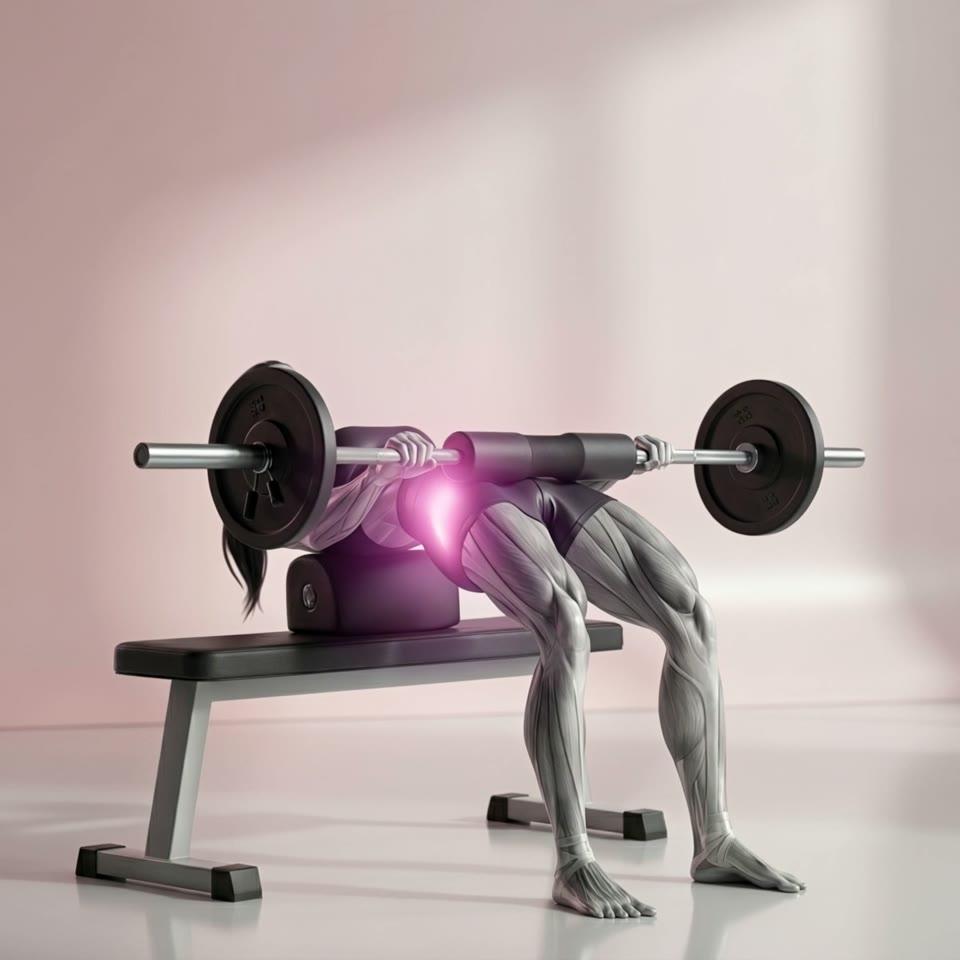
Building your glutes becomes much easier to organise when you stop asking which single exercise is best and start asking what you can repeat, recover from and gradually improve. A useful plan combines challenging resistance training, enough food to support that work, and a record of what you actually did.
This guide is a framework for generally healthy adults beginning or returning to training. The routines linked here are examples, not individual prescriptions. If an exercise causes pain, change the movement or stop; do not treat pain as proof that a workout is effective.
What actually belongs in a glute-building plan?
Start with three decisions: where you will train, how many sessions fit your real week, and which exercises you can perform with a repeatable setup. Choosing a five-day schedule that you regularly abandon is less useful than completing two manageable sessions.
You do not need to train every movement in every session. Instead, use a small menu across the week: a bridge or thrust, a squat or split squat, a hip hinge, and an optional hip-abduction movement. These categories make exercise selection easier without pretending that each exercise isolates one exact part of your shape.
The gluteus maximus is involved in extending the hip. The smaller gluteal muscles contribute to movements such as moving the thigh away from the midline and controlling the pelvis. Training can change muscle size and capacity; it cannot choose your pelvis shape, fat distribution or tendon attachments.
Build a repeatable exercise menu
Pick movements that give you a stable base and a clear way to increase difficulty. A hip thrust may be easy to load at the gym, while a glute bridge is a more convenient starting point on the floor. Neither is compulsory.
Swipe the table to see all columns →
| Movement pattern | Gym example | Home alternative | What to record |
|---|---|---|---|
| Bridge or thrust | Barbell hip thrust | Dumbbell glute bridge | Load, reps, comfortable top position |
| Squat or split squat | Bulgarian split squat | Supported split squat | Load, reps per side, support used |
| Hinge | Romanian deadlift | Dumbbell Romanian deadlift | Load, reps, repeatable depth |
| Hip abduction | Cable hip abduction | Side-lying hip abduction | Resistance, reps, controlled range |
Stay with the same core movements for several weeks unless there is a good reason to change. Repeated practice makes your log more meaningful. If every session uses a different variation, comparing performance becomes difficult.
Decide how much work to start with
A working set is a challenging set performed after the easier practice sets you use to prepare. Not every warm-up or band movement needs to count as a hard glute set. Squats, hinges and single-leg movements can overlap, so avoid counting every exercise as if it trained an entirely separate muscle.
Our beginner routine starts with a modest amount of work spread across two sessions. Treat that as a trial, not a minimum you must exceed. If you are new, fewer sets may be enough to learn and improve. Add work because your recovery and performance support it, not because another person's programme has a larger number.
A recent ACSM overview of resistance-training research supports progressive resistance training and identifies training volume as relevant to hypertrophy. It does not supply a personalised set target for your body, schedule or exercise choices.
Make progression specific
Choose a rep range, then keep the setup and technique consistent. For example, your plan might call for two sets of 8–12 controlled repetitions. Keep the same weight while you build towards the top of that range. Once both sets reach it with the intended effort and good control, try the next small weight increase.
The next session may return you to fewer repetitions. That is normal: you made the task harder. Write the load and repetitions down so you can distinguish a temporary fluctuation from a genuine plateau. Our progressive-overload guide explains what to do when the next available dumbbell is too heavy.
Repetitions only count as progression when you are still doing roughly the same task. Shortening the range, bouncing the weight or changing the exercise halfway through a set can make the numbers look better without giving you a useful comparison.
Give recovery an actual place in the schedule
For a two-session starting plan, place at least a rest day between demanding lower-body sessions. Keep other activity in mind: a new running plan, a physical job or another sport can affect how ready you feel for the next workout.
Before adding volume, ask whether your working weights and repetitions are stable or improving. Persistent soreness that changes how you move, repeated performance drops or a schedule you cannot sustain are reasons to review the plan. Soreness is information, not a score you need to maximise.
Support the work with food
Start with regular meals, a protein source you enjoy and enough overall food to train consistently. Protein is useful, but a protein shake cannot compensate for a programme you never progress or for routinely skipping meals.
You do not need to force a large calorie surplus or follow an aggressive cutting phase to begin strength training. Body composition, experience and goals affect what is appropriate. The nutrition guide explains a practical approach without promising that a specific food will grow one body part.
Measure a trend, not a daily verdict
The clearest early sign of progress may be completing the same exercise with better control or more repetitions. Changes in appearance can take longer and are affected by lighting, pose and clothing. Combine training records with optional, consistent photos rather than repeatedly checking a single score.
A photo-based app estimate is not a measurement of muscle volume or body fat. Use it as an organisational aid, not a diagnosis or a substitute for what your training log tells you. See how to track glute progress for a fair comparison method.
Your first four weeks
In week one, learn the exercises and record comfortable starting loads. In week two, repeat the same menu and improve consistency. In weeks three and four, add a repetition where appropriate or make a small load increase when you have earned it. Keep the schedule steady before adding more days.
At the end of the month, review attendance, technique, performance and recovery. If you completed the plan and several movements improved, you have a useful foundation. Continue building on it rather than replacing it simply because it is no longer new.
Questions that come up often
Can I build glutes without squats?
Yes, you can choose other exercises that challenge hip extension and single-leg strength. The useful question is whether your alternatives are challenging, repeatable and practical to progress. Squatting is an option, not an entry requirement.
How quickly should I expect a visible change?
There is no reliable individual deadline. Starting point, consistency, nutrition and how you compare images all matter. Track training performance over weeks and review appearance under similar conditions over a longer period; avoid judging the plan from a few days.
Research and further reading
- ACSM resistance-training position stand, 2026: broad training guidance for healthy adults, not a glute-specific prescription.
- Gluteus maximus hypertrophy review, 2025: examines resistance exercises and glute growth; the available studies have different populations and protocols.
- Our editorial approach: how we distinguish research findings, practical examples and product features.
Put it into practice
Give your next workout a plan.
Get started with Glutely for workouts, exercise demonstrations and a place to organise your training. Explore the app and review the available membership options before choosing a plan.
Get started with Glutely